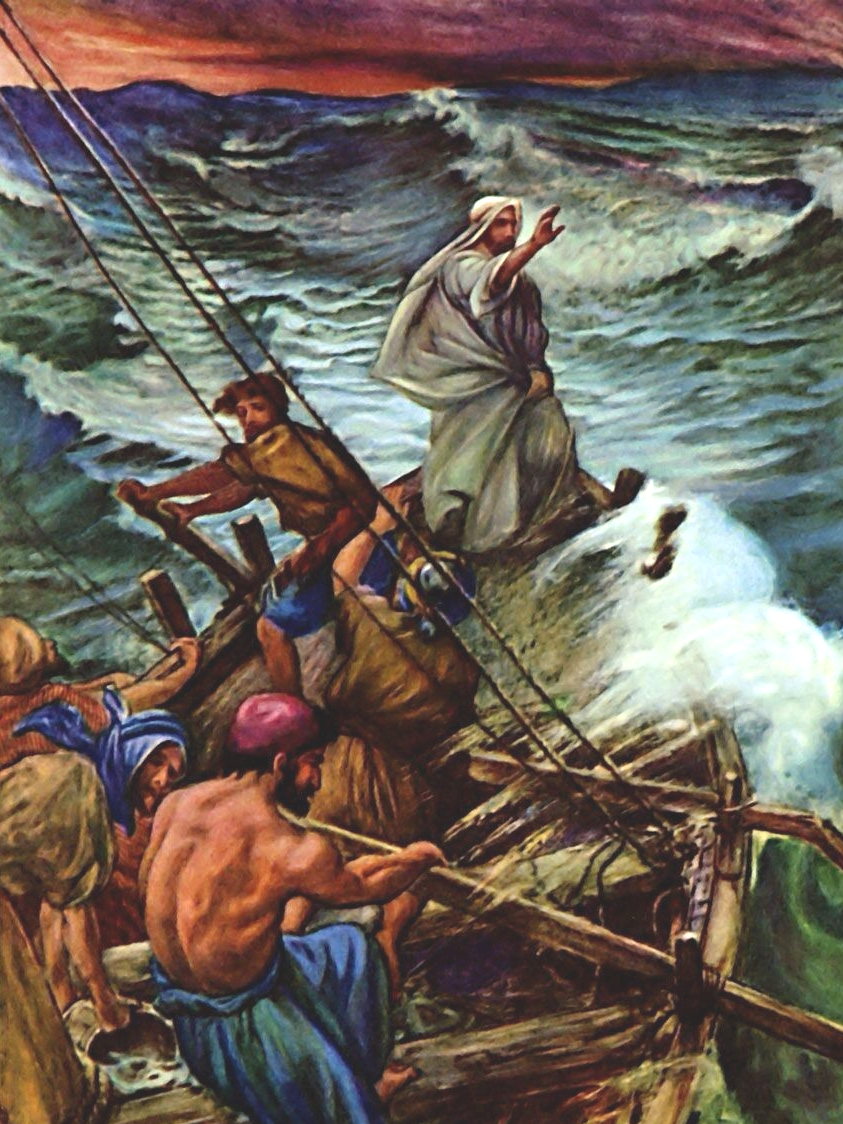
Ignatian Praying With Scripture
With Gospel narratives St. Ignatius Loyola encouraged contemplation: not merely intellectually analyzing a scripture scene, but imaginatively “being there,” quietly present in the scene—often in silence— entering the gospel scene, using your senses, seeing the light, hearing the voices, feeling the dust or sea breeze—quietly watching Jesus heal, listening to his words, or standing among his disciples. And while “being there,” noticing your emotional response—recognizing God’s movements in your heart. The purpose of contemplation is to allow the scene to become an occasion for a personal encounter with Jesus. Thus, after quietly “being there,” then speak directly to the person of Jesus, not merely about him but to him. Your response is a heart-to-heart prayer, honest speech to Jesus, joined with receptive listening.
Mark 4:35-41, Jesus Calming the Storm
Read the passage slowly, several times.
Put yourself in the boat: imagine the waves, the fear, and the sleeping Jesus.
Listen to Jesus as he addresses you and the others in the boat.
Notice what you feel when Jesus says, “Peace! Be still!”
Notice what happens to the tension and fear in the boat.
Rest in the presence of Jesus, the One who calmed the seas.
Then speak to Jesus about your own storms and ask for a particular grace you need.
Perhaps make a brief resolution — entrust a personal anxiety to Jesus’ care.
Closing prayer: Ignatius often ended a prayer period with an Our Father.
How to Begin
Prepare: Choose a Gospel passage; read it slowly.
Enter into the scene: Become aware of its people, landscape, sounds, and atmosphere — as though you were present, using all of your senses.
Remain silently present: Just “be” with Jesus in the scene you have chosen.
A Simple example